
The SuperHERO (Super–High Energy Replicated Optics) mission is a NASA-funded balloon-borne observatory, selected through NASA's Astrophysics Research and Analysis Program.
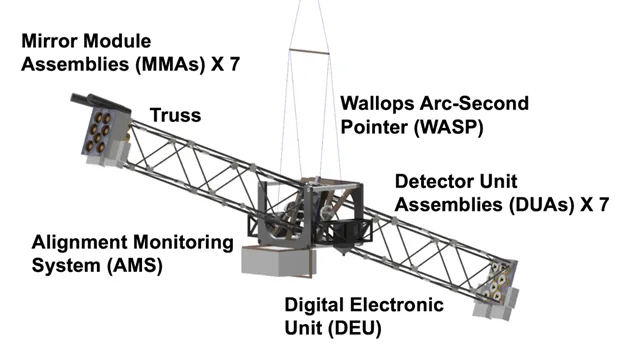
Designed to make images ten times sharper in the hard X-ray band than previous missions, SuperHERO represents a major leap forward in space exploration technology and serves as a testbed for a more extensive future mission that aims to build upon the success of NuSTAR (Nuclear Spectroscopic Telescope Array), which was launched by NASA in 2012.
SuperHERO's primary goal is to capture incredibly detailed images of high-energy objects in space, such as pulsar wind nebulae, supernova remnants, and active galactic nuclei. These objects are among the most energetic and mysterious in the universe. The mission achieves this using the latest advancements in X-ray mirror technology developed at NASA's Marshall Space Flight Center (MSFC). These mirrors are capable of capturing details with unprecedented precision.
The mission is a collaboration between MSFC, Washington University in St. Louis (WashU), University of New Hampshire (UNH), Kavli IPMU in Japan, JAXA (Japan Aerospace Exploration Agency), and NASA's Wallops Flight Facility. By leveraging breakthroughs in Marshall's replicated nickel shell optics technology, SuperHERO aims to achieve angular resolution better than 10 arcseconds (1/3600 of a degree), vastly improving upon current state-of-the-art hard X-ray astrophysics observatories.
Nickel shell optics technology uses "grazing incidence mirrors" to focus X-rays. Imagine stacking two curved slices of an onion; X-rays pass through these iridium-coated nickel-cobalt shells and bounce off their surfaces at shallow angles, focusing onto a spot about 12 meters away.
Looking forward, a space-based version of SuperHERO could capture even finer details, potentially down to 5–7 arcseconds. This precision would greatly help scientists tackle major research goals outlined in the 2020 Decadal Survey, a critical report that guides future priorities in astronomy and astrophysics.

The WashU SuperHERO team is led by Henric Krawczynski, the Wilfred R. and Ann Lee Konneker Distinguished Professor in Physics and a fellow of the McDonnell Center for the Space Sciences within Arts & Sciences. The team includes Project Manager Ally McClure, Senior Equipment Specialist Danny Radomski, and several WashU graduate students. Mechanical engineer Victor Guarino has been hired as an independent consultant for the project.
A crucial component of the mission is the 12m optical bench, a variation of the design Krawczynski's group developed for the XL-Calibur hard X-ray polarimetry mission. Constructed with precision aluminum joints machined in the WashU Physics Department machine shop, the optical bench ensures that when the telescope tracks a cosmic source across the sky and collects X-rays through the X-ray mirrors, the focal spots of the mirrors, positioned 12m away, move by less than a couple of millimeters. Additionally, the truss is designed to withstand the intense accelerations during the payload’s descent at mission's end, including parachute deployment, requiring it to endure forces more than 16 times Earth's gravity.
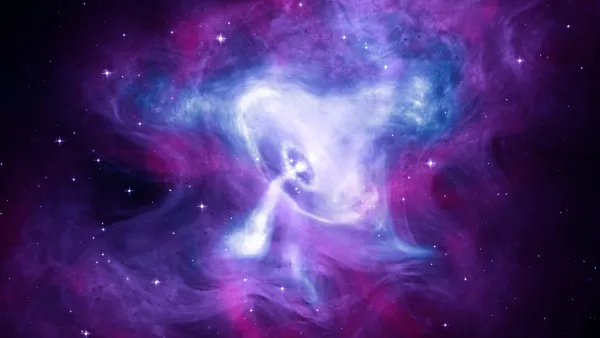
SuperHERO's inaugural flight is planned for August 2028 from Fort Sumner, NM. The mission aims to study the Crab Nebula, focusing on mapping its jet and toroidal structure in the hard X-ray band. During an 8-hour observation, the mission expects to collect around 70,000 individual X-ray detections, or "counts," from the jet region of the nebula. To put it simply, a high number of counts means a wealth of useful data is being gathered.
"SuperHERO is expected to make the sharpest image of the Crab Nebula yet. Mapping the jet and nebula with ten times better imaging resolution than before will allow us to explore how an exotic wind made of electrons and their antiparticles, positrons, moving at almost the speed of light is shocked and accelerates particles to extremely high energies," says Krawczynski.
Nicholas Thomas, a Research Physicist at MSFC and Principal Investigator of SuperHERO, expressed enthusiasm about the project, saying, "SuperHERO will explore the hard-X-ray sky with unprecedented angular resolution, enabling us to image high-energy astrophysical phenomena in extraordinary detail. From pulsar wind nebulae to the supermassive black holes that power active galactic nuclei, this mission will uncover the fine structure of some of the most extreme objects in the universe. Its enhanced resolution will also enable us to detect extremely faint sources by distinguishing them more clearly from the background. The Marshall team looks forward to working with our colleagues at WashU, the University of New Hampshire, as well as our partners at the Universities Space Research Association and the Kavli Institute for the Physics and Mathematics of the Universe, to bring SuperHERO to life!”
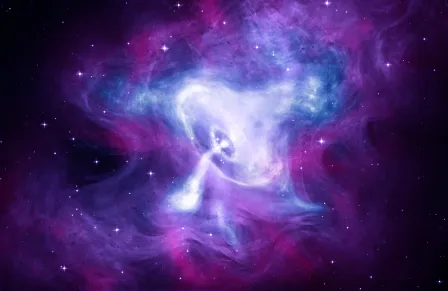
Credit: X-ray: NASA/CXC/SAO; Optical: NASA/STScI; Infrared: NASA-JPL-Caltech
The Crab Pulsar is a neutron star at the heart of the Crab Nebula with a radius of approximately 12 km and a mass of several times that of the Sun. It formed from a star that exploded, nearly becoming a black hole but lacking sufficient mass to do so. As the stellar matter contracted, it amplified the star's magnetic field. The magnetic neutron star spins around once every 33 milliseconds, generating enormous electric fields that strip electrons and protons from the neutron star's surface. Some electrons are energized near the neutron star and emit gamma rays, which interact to create matter (electrons and positrons) from pure energy.
This process leads to a strong wind of electrons and positrons, along with superstrong currents flowing away from and towards the neutron star. The shocked wind is believed to accelerate particles that emit the observed hard X-rays and gamma rays. By imaging this outflow far more precisely than ever before, the SuperHERO team aims to gain deeper insights into the configurations of electron-positron pairs and electrical currents.
The mission will also observe Hercules X-1, an eclipsing neutron star binary system, to help characterize the instrument's Point Spread Function, which is essential for understanding how precisely the telescope can define the location of X-ray sources. Hercules X-1 consists of a neutron star that passes behind its companion star, offering researchers a unique opportunity to study its properties in detail.
Depending on their visibility and position in the sky, the mission might also observe Cygnus X-1 and NGC 4151. Cygnus X-1 is a black hole binary system, providing a unique opportunity to study a black hole's behavior and its interactions with its companion star. NGC 4151 is an active galactic nucleus with a supermassive black hole at its center, making it an excellent target for understanding the energetic processes in galaxies.
Ultimately, future SuperHERO missions may include long-duration balloon flights and potential space-based versions to tackle broader scientific goals. These may include mapping hard X-ray jets in M87, exploring emissions from the Galactic Center, or identifying non-thermal components in galaxy clusters like the Bullet Cluster. These missions aim to expand the observatory's effective area and energy coverage.
Besides advancing hard X-ray science, SuperHERO serves as a valuable training platform for graduate students and early-career scientists. Students from WashU, UNH, and other partner institutions gain hands-on experience in mirror calibration, detector integration, truss construction and payload operations. This active involvement provides vital experience in instrumentation, calibration, and mission development, preparing them for future careers in scientific research and space exploration.


