
The Roman Space Telescope: The Roman View of Strong Lenses: the St. Louis Astronomical Society September meeting
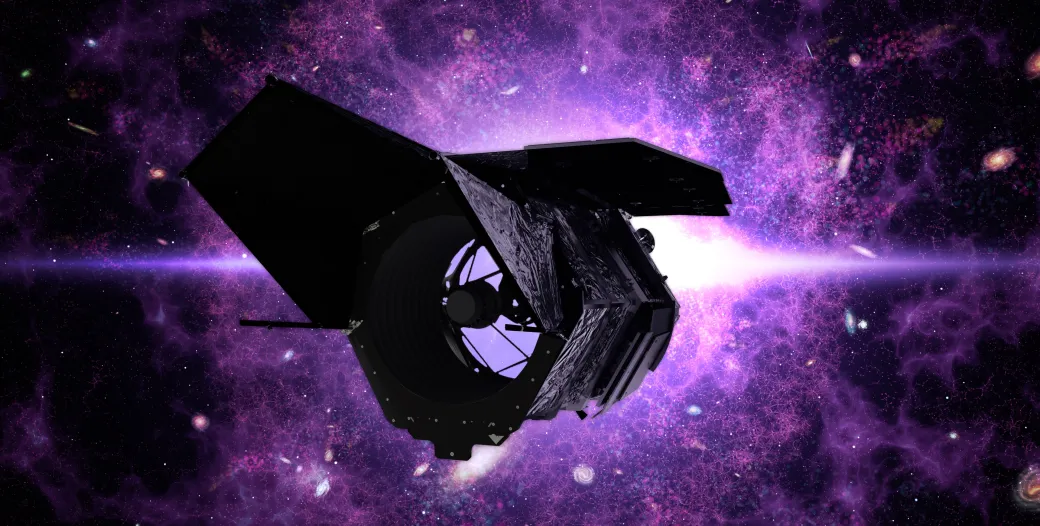
The Nancy Grace Roman Space Telescope was scheduled for launch in October 2026. 47% budget reductions to NASA’s science programs will delay, if not permanently cancel, the launch date – even though the Telescope’s construction has been completed. The Roman Space Telescope (RST) is an infra-red instrument with a field of view 100 times larger than the Hubble Space Telescope. It would make possible major advances in the study of planets around other stars, supernova explosions, the nature of dark energy, the structure of the universe, and many other areas on the frontiers of astronomy and cosmology. One of those areas involves discoveries using gravitational lensing. The lensing occurs when light, and infra-red energy, of a distant object is magnified by the strong gravity of a closer object. That closer object’s gravity distorts space, acting like the glass lens of a regular telescope. Dr. Daylan explains that the RST “will play a transformative role in strong lensing science with its planned wide-field surveys. The Roman is uniquely suited to characterizing dark matter substructure from a robust population of strong lenses.” He will present a simulation of detectable strong lenses in Roman's planned High Latitude Wide Area Survey to show how the RST will work, if and when it is launched.
Dr Tansu Daylan joined the Washington University Physics Department faculty as an assistant professor in Fall 2023. His research program seeks to better understand the particle nature of dark matter and how exoplanets form, evolve, migrate, and potentially support life.
The St. Louis Astronomical Society is an organization for individuals interested in astronomy and telescopes. The public is invited to attend its meetings, telescope observing sessions, and special events. For more information about Astronomical Society events, please visit www.slasonline.org.
Free parking will be available.